
Finding Inspiration

One of the most common questions that writers get asked is about where we find the inspiration for our books. Some people say that the characters come to them first and then the story shapes itself around them. For others, it will be an event or a location that provides the initial spark. In my case, it can literally be anything. With my Avonstow series, each book was inspired in a different way. 'Folly' began with the image of a body being found - at the time, it wasn't even a historical one, but the image stayed with me and eventually became the opening event of the series. 'The Mermaid was inspired by a location - I knew I wanted to write a book with the Lido at the heart of it, so I could talk about how important it is to the town. The final book of the series, 'Silver Darling' was inspired by a real life event - the 1953 flood that devastated the east coast of Britain. My first book, 'Unforgettable' began with the iage of a woman sat under a tree reading a book. This vision popped into my head on a visit to Beth Chatto Gardens, and asking questions about both the woman and the person observing her, allowed me to develop the plot.

When it comes to future books I have planned, the background to them is just as varied. I have a basic plot outline for one that was inspired by a true crime documentary, one that began with a location, but then changed to be set somewhere entirely different and a third that was a genuine combination of person and place. Sometimes, it takes years from the initial idea to bring the novel to fruition and other times it can be really quick. The initial idea for 'Unforgettable' came in 2017 and I started writing it in 2018, but 'Blythewode', the novel I'm currently editing, began life in 2014, but stalled after about 15,000 words and the first draft wasn't completed until 2020, by which time I'd changed almost everything about the original story.
Short stories, however, are a different matter. Recently, all the short form prose I've been writing has been much more deliberate. Because I've been using photos as the starting point for 'Words Will Travel', it has sometimes been less about finding inspiration and more about carefully constructing a narrative around the photo. This is because usually the poem comes first and so the short story has to be coaxed out. Many of them have been helped by either having a historical event linked to the photo, as in the case of both 'The Visitor' and 'The Mission', or by having a definite structure to work within. 'To Undreamed Shores' came about because I had to write something epistolary (told wholly or predominantly through letters) for a competition. The photograph had given me the location, so all I had to work out was what might prompt someone to write a letter and leave it there.
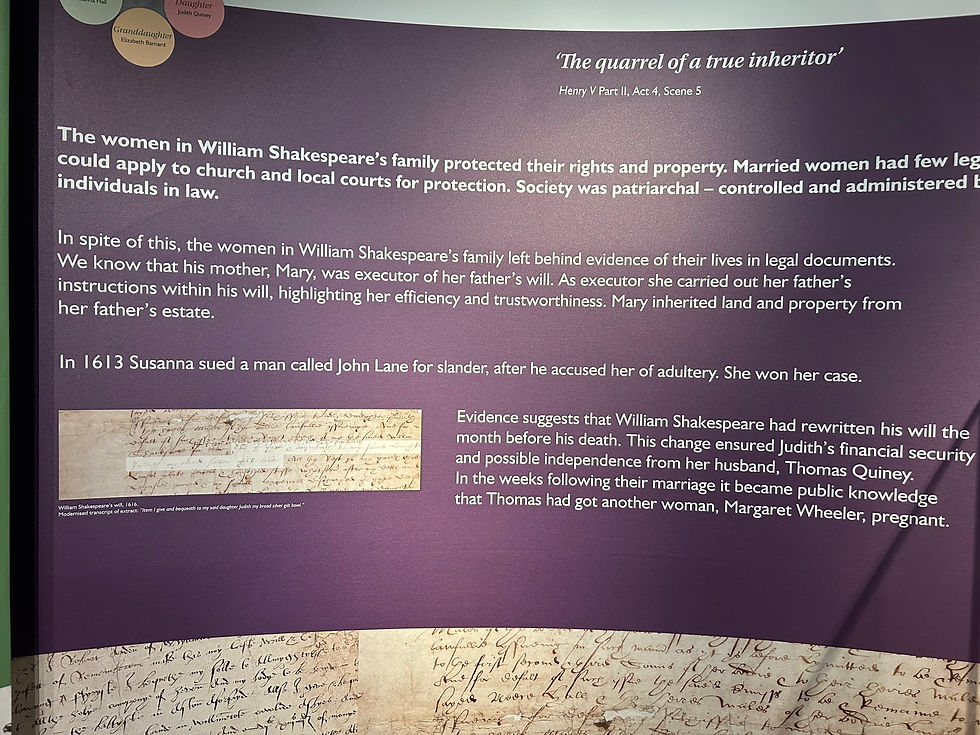
Nevertheless, occasionally a story creeps up on me unexpectedly and demands to be told. This happened most recently in the summer of 2024 when we visited Stratford-Upon-Avon. New Place had an exhibition called 'Hidden Voices' about the women in Shakespeare's life and I was fascinated by the stories about his two daughters. The younger of the two, Judith, married Thomas Quiney, who was subsequently found to have fathered a child with another woman around the time of their marriage. This resulted in a change to the wording of Shakespeare's will to ensure that his daughter, rather than her husband, had control of the inheritance. The elder, Susannah, was falsely accused of adultery, but defended herself against the allegation and her accuser failed to turn up when the case went to court. It is thought that the accusation was politically motivated, and it was this that got me thinking about the people involved and how they might have reacted to the situation. I have yet to write Judith's story, though it is still there waiting to be aired. It was Susannah who was more insistent and her story became 'What Silent Love Hath Writ', the opening tale in my collection, 'Hidden Voices'. I think this is one of my favourites of the stories I've written, not only because it won the competition I wrote it for, but also because it gives a voice to a historical character we know relatively little about. In my short fiction, this seems to be a common theme that runs through many of the narratives in a way that doesn't happen with my longer form writing.
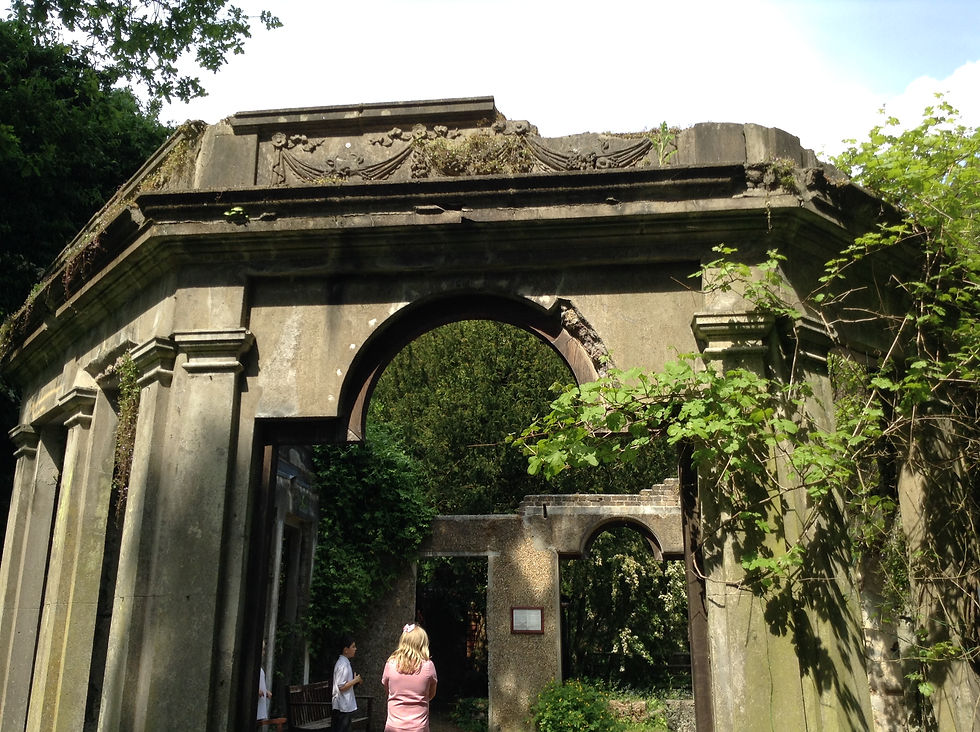
So, to go back to the question I posed at the beginning about where I get the inspiration from for my stories and novels, I suppose the short answer is "from life". The fact is, it comes in so many different forms and places that it's almost impossible to pin one down and say, 'that's it, that's where all my ideas come from'. I could be out walking with the dog and the family and see a nice view that prompts a poem, or I might read something and think, 'that's a story I need to explore further and re-tell'. We never know when inspiration will strike and it's one of the reasons experienced writers always tell new ones to make sure they constantly have a notebook to hand. Every writer knows that if you don't write the idea down the moment you have it, you WILL forget it. It doesn't matter how brilliant it is, it will vanish from your memory the moment you get distracted. And trust me, little is more frustrating than losing an amazing idea for a book! Personally, I have a notebook for novel ideas and another for random short stories, as well as one for my Words Will Travel series. Although this may seem like overkill, it allows me to keep track of all the different things I want to write, so that when the time comes to get serious about writing them, I have all my initial notes and ideas.


Comments